What human advisors offer in the AI era
November 18, 2026

Cyrus McCormick patented the mechanical reaper in 1834, but it took decades for the technology to gain widespread adoption. Manufacturing had to scale, distribution networks had to develop, and farmers had to adapt. Agricultural labor transformed over generations.
Compare that to AI’s timeline. ChatGPT had 100 million active users within two months of its public release. Generative AI adoption outpaced both the personal computer and the internet. Advancements happen fast through software updates that reach around the world simultaneously.
In our industry, tasks that once took 4–6 hours now take less than one. Some firms have phased out paraplanning roles in favor of AI workflows. Clients are increasingly using AI to answer financial questions and explore their options. So we have to ask ourselves: What are clients paying for?
To answer that, we need to understand the two kinds of knowledge behind financial advice.
AI is increasingly capable of replicating the first. The second is much harder to automate.
AI reprices each layer of financial advice. And it reveals where advisors add the most value.
A business sale, retirement, divorce, or the loss of a spouse changes more than someone’s financial picture. It reshapes identity, purpose, and plans for the future. People facing these transitions need to feel seen, not just analyzed through the lens of financial data. An advisor provides guidance grounded in genuine empathy and real experience helping others navigate life changes.
For generations, the financial industry has largely treated wealth as another word for money. “Wealth” actually comes from the Old English weal, meaning well-being (just as “health” comes from “heal”). Wealth is the condition of a whole life going well. Money supports it, much like sleep supports health.
That’s why we begin every financial plan by asking questions that go beyond the balance sheet:
The answers reveal the relationships, experiences, purpose, and legacy that give wealth meaning.
Judgment and trust really show their value when markets are volatile. During a downturn, you may feel compelled to sell and wait for conditions to improve. A trusted advisor puts that moment in perspective, helping you view short-term market activity in the context of your long-term goals.
This chart illustrates how a hypothetical $10,000 investment in the S&P 500 from 1979 through 2026 would have grown if left invested, compared with the results of missing the market’s best days (source: First Trust, Bloomberg).
Growth of $10K invested in S&P 500 (12/31/1979 – 9/30/2026)
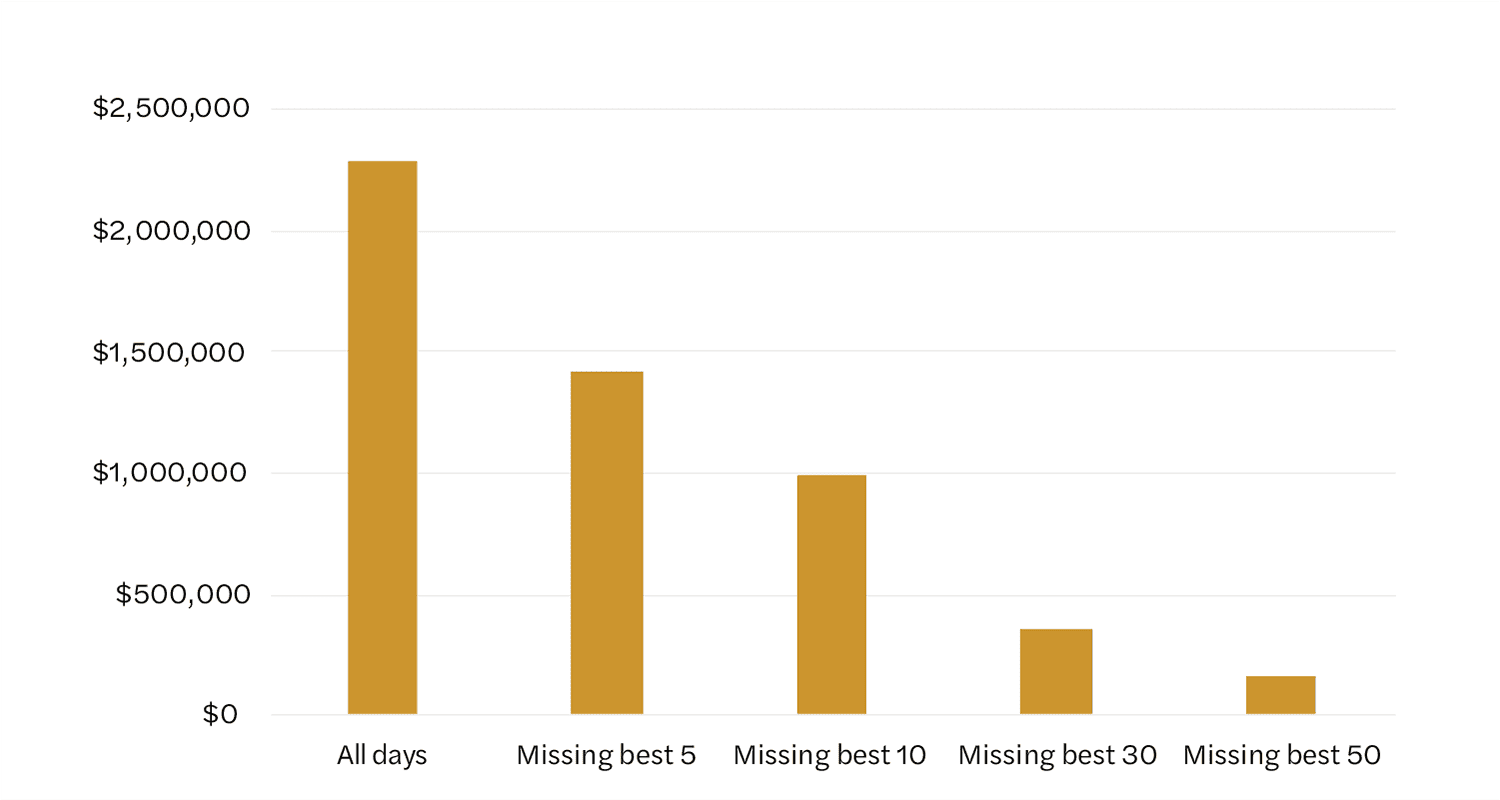
Reacting to market volatility can have lasting consequences. At Gentry, we help clients maintain perspective, understand their options, and make decisions aligned with their long-term goals. That’s part of the value of a lasting advisory relationship.
Consider a high-net-worth professional who already turns to AI for answers before her workday begins. Ten years from now, she may be able to generate a financial plan on her phone, in her parked car, before walking into a meeting with her advisor. And that plan may be a good one.
Here’s what she’ll be paying for:
Money advice is codifiable, which is why machines can do it now. Advice about your whole financial life is tacit, demanding a human who can see another human. We build financial plans around questions no calculator has ever asked a prospect. Not simply, “How much do you have?” but “Is your life well-designed and well-served by your money?”
As AI continues to reprice certain layers of financial planning, it also brings the value of human advice into focus. That means understanding what wealth looks like to you, helping you make decisions that support it, and guiding you through life’s transitions while preserving what you’ve worked to build.
Does your wealth support the life you want to live? Let’s start a conversation about what that looks like.

You are now leaving the Gentry Private Wealth Website and will be entering the Charles Schwab & Co., Inc. (“Schwab”) Website. Schwab is a registered broker-dealer, and is not affiliated with Gentry Private Wealth or any advisor(s) whose name(s) appears on this Website. Gentry Private Wealth is independently owned and operated. Schwab neither endorses nor recommends Gentry Private Wealth. Regardless of any referral or recommendation, Schwab does not endorse or recommend the investment strategy of any advisor. Schwab has agreements with Gentry Private Wealth under which Schwab provides Gentry Private Wealth with services related to your account. Schwab does not review the Gentry Private Wealth Website, and makes no representation regarding the content of the Website. The information contained in the Gentry Private Wealth Website should not be considered to be either a recommendation by Schwab or a solicitation of any offer to purchase or sell any securities.
